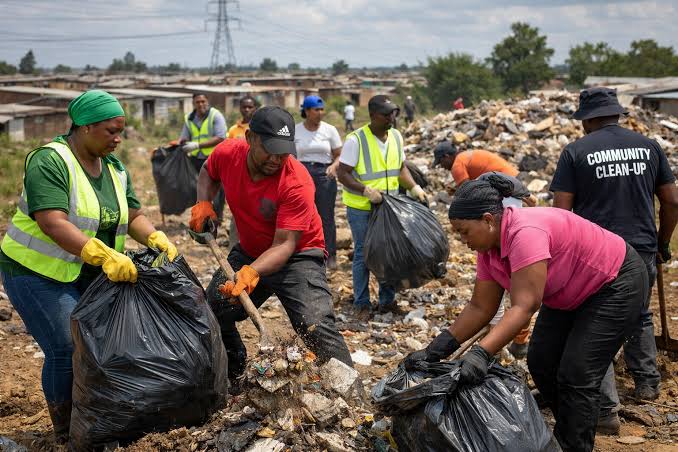
When Communities Come Together, Change Starts Locally
Community development is taking shape across South Africa as residents, local organisations, entrepreneurs and community groups find practical ways to improve their neighbourhoods and create stronger, more connected communities.
From community clean-ups and youth programmes to local markets, safety initiatives and neighbourhood events, ordinary South Africans are increasingly finding ways to create positive change in the places they call home.
In Johannesburg, initiatives such as Main Street Sundays have offered a glimpse of what can happen when residents, creatives, businesses, volunteers and community organisations come together around a shared space. The August edition transformed parts of the inner city into a pedestrian-focused environment where families, cyclists, creatives and visitors could experience the city differently.
While events like these may appear simple on the surface, they point to something much bigger: the importance of communities having spaces where people can participate, connect and take pride in where they live.
Building Communities Through Participation
Community development is not only about infrastructure. It is also about people.
A neighbourhood becomes stronger when residents feel that they have a voice in what happens around them and when local institutions, businesses, civil society organisations and government work together to address challenges.
South Africa’s District Development Model, for example, is built around closer cooperation between different spheres of government, traditional leaders, civil society, the private sector and communities. Its objective is to improve planning, coordination, service delivery and local economic development.
The approach reflects an important principle: sustainable development is more effective when communities are not simply recipients of services but active participants in shaping their future.
From Clean Streets to Stronger Neighbourhoods
One of the most visible forms of community participation is the work being done to improve public spaces.
Government’s 2026 “Love Your Street” outreach activities, for instance, have included community cleaning activations and engagements with residents in areas such as Manenberg and Khayelitsha. The initiative promotes community pride, active citizenship and clean and safe neighbourhoods.
These efforts demonstrate how something as straightforward as caring for a street, park or public space can become part of a broader conversation about dignity, safety and belonging.
Clean and well-maintained public spaces can encourage people to spend more time outdoors, support local economic activity and create environments where neighbours are more likely to interact.
Local Action Can Also Create Economic Opportunity
Community development and economic development are closely connected.
When neighbourhoods become more vibrant and better connected, local entrepreneurs and small businesses can benefit from increased activity.
South Africa’s National Treasury has highlighted the importance of neighbourhood development in creating more inclusive, liveable and sustainable urban environments. Its Neighbourhood Development Partnership Programme focuses on supporting targeted areas to attract investment, improve quality of life and expand access to economic opportunities.
For township and community-based entrepreneurs, this can create opportunities to participate in local supply chains, provide services, establish businesses and contribute to the economic life of their neighbourhoods.
The result is a cycle in which stronger communities can support stronger local economies, while thriving local businesses can contribute to community development.
Young People Have a Role to Play
Young people are also central to the future of South Africa’s communities.
Youth programmes that provide skills development, mentorship, employment opportunities, sport, arts and entrepreneurship support can help young people become active contributors rather than simply beneficiaries of development programmes.
Community safety initiatives are increasingly incorporating youth empowerment alongside traditional crime-prevention measures. In the Western Cape, for example, community-driven safety and development projects have included youth empowerment, skills development and employability programmes.
Such initiatives recognise that safer communities require more than policing. They also require opportunities, support systems and positive spaces where young people can develop their potential.
The Power of Small Actions
Not every community initiative needs a large budget or national campaign behind it.
A group of residents organising a clean-up.
A local entrepreneur employing young people.
A mentor helping a teenager develop a skill.
A community organisation creating a safe space for children.
A neighbourhood coming together to support a family in need.
These actions may appear small individually, but collectively they can change how people experience their communities.
They also create something that cannot easily be measured in statistics: a sense of belonging.
When people believe that their contribution matters, they are more likely to participate, volunteer, support local initiatives and take responsibility for the spaces they share.
Communities Are Part of the Solution
South Africa continues to face significant challenges, including unemployment, inequality, inadequate infrastructure and pressure on municipal services. Government’s 2026 Local Economic Development Summit acknowledged many of these challenges while emphasising the importance of coordinated, inclusive and sustainable local economic development.
But communities should not be viewed only through the lens of their challenges.
Across the country, people are organising, creating, building businesses, supporting one another and finding new ways to make their neighbourhoods better.
These stories deserve attention.
They remind us that development is not only about what happens at national level. It is also about what happens on a street, in a school, at a community centre, in a small business or around a neighbourhood gathering.
Celebrating the People Making a Difference
Community Stories is about putting those people at the centre of the conversation.
Everyday Mzansi will continue to highlight individuals, organisations, entrepreneurs, volunteers and community groups whose work is helping to build stronger communities across South Africa.
Because sometimes the biggest changes begin with ordinary people deciding that their community is worth investing in.
And when people come together with a shared sense of purpose, even small actions can become the beginning of something much bigger.