
Africa’s New Generation of Entrepreneurs Is Changing the Continent
Africa is entering an entrepreneurial era defined by creativity, resilience and a willingness to solve problems differently.
Across the continent, a new generation of entrepreneurs is building businesses not simply because they want to become wealthy, but because they have identified challenges in their communities and believe they can create better solutions.
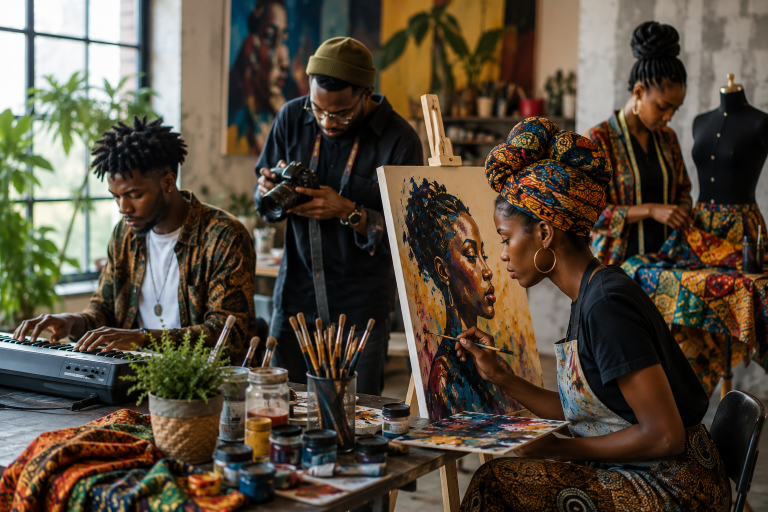
From technology and agriculture to fashion, food, financial services and the creative economy, African entrepreneurs are finding opportunities in places where previous generations often saw only obstacles.
From surviving to building
For many young Africans, entrepreneurship is not a distant corporate ambition. It is a practical response to unemployment, limited opportunities and changing consumer needs.
But something is changing.
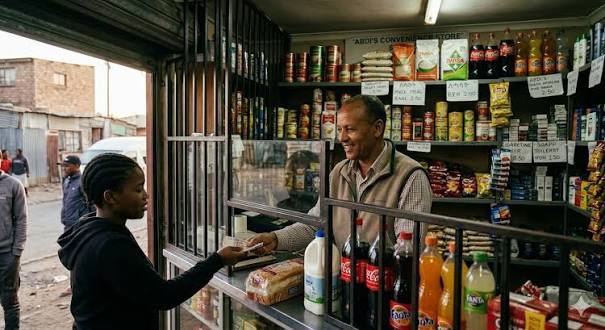
More entrepreneurs are moving beyond informal survival businesses and thinking deliberately about brands, technology, scalability and regional markets.
A small business selling products locally can now use social media to reach customers hundreds of kilometres away. A designer can showcase African creativity to an international audience without opening a physical store overseas. A food entrepreneur can build a recognisable brand from a home kitchen and grow through digital platforms.
The barriers have not disappeared, but the possibilities have expanded.
Technology is opening new doors
Technology has become one of the most powerful tools available to Africa’s emerging entrepreneurs.
Mobile payments, social media, e-commerce, artificial intelligence and digital business tools are changing the way entrepreneurs market, sell and communicate with customers.
For a business owner, a smartphone can now serve as a marketing department, customer-service desk, sales channel and networking tool.
This matters particularly in markets where traditional business infrastructure can be expensive or difficult to access.
Digital platforms are allowing entrepreneurs to start small while thinking much bigger.
African solutions for African challenges
One of the most exciting developments is the growing number of businesses focused on solving problems that are deeply connected to African communities.
Entrepreneurs are developing ideas around food security, financial inclusion, education, healthcare, transportation, clean energy, waste management and access to markets.
These businesses demonstrate something important: Africa’s challenges can also become opportunities for innovation.
The entrepreneur who understands a problem because they experience it personally may be uniquely positioned to develop a practical solution.
Women are building the future too
African women are playing an increasingly visible role in entrepreneurship.
They are building businesses across sectors while creating employment, supporting families and contributing to local economies.
For many women, entrepreneurship also represents independence and the ability to make decisions about their economic futures.
Yet women entrepreneurs continue to face barriers, including access to finance, networks, markets and business support.
Supporting women-owned businesses therefore goes beyond individual success. When a woman grows a sustainable business, the impact can extend to employees, suppliers, families and communities.
The next opportunity may be regional
One of Africa’s greatest opportunities lies in its ability to connect entrepreneurs across borders.
A business that begins in Johannesburg does not necessarily have to remain a South African business. A company founded in Lusaka can potentially serve customers elsewhere in Southern Africa. A creative brand from Lagos can find an audience in Nairobi, Accra or Cape Town.
Regional trade and stronger connections between African markets could give entrepreneurs access to larger customer bases and new partnerships.
The African entrepreneur of the future may therefore need to think less about “my country” and more about “my continent.”
What entrepreneurs need now
Talent and ideas are not enough.
Entrepreneurs need access to finance, reliable infrastructure, skills development, mentorship, markets and networks.
They also need environments where businesses can experiment, fail, learn and try again.
Governments, financial institutions, corporates and established businesses all have a role to play in creating those opportunities.
But entrepreneurs themselves have a role too.
Building a sustainable business requires more than passion. It requires discipline, financial management, customer understanding, strong systems and the willingness to keep learning.
A continent of possibility
Africa’s entrepreneurial story is still being written.
The most exciting part may be that the next chapter does not have to be written by a handful of large corporations or international investors.
It can be written by ordinary Africans with extraordinary ideas.
A young person with a laptop.
A woman turning a small food business into a brand.
A farmer using technology to reach new markets.
A designer taking African creativity to the world.
A founder developing a solution to a problem that millions of people face.
These entrepreneurs are not waiting for Africa’s future to arrive.
They are building it.
And perhaps that is the most important story of all.