
Why Small Businesses Are Becoming the Backbone of Mzansi’s Economy
South Africa’s economy is often discussed through the performance of major corporations, banks, mining companies and multinational businesses.
But much of everyday economic activity happens somewhere else.
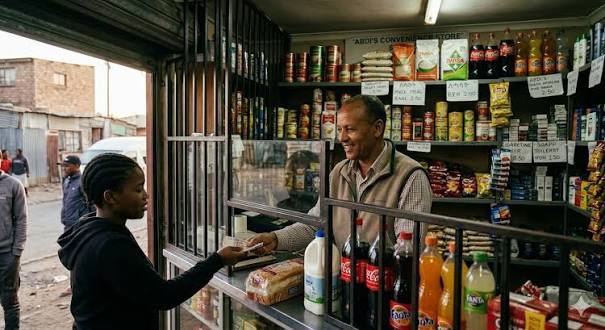
It happens in small shops, salons, restaurants, workshops, farms, offices, online stores and home-based businesses across the country.
These South African small businesses may not always make national headlines, but collectively they play an enormous role in keeping communities economically active.
They employ people.
They buy from other businesses.
They provide services.
They create new products.
And many are solving problems that larger companies don’t always see.
Small businesses are close to their customers
One of the greatest advantages of a small business is proximity.
A local business owner often knows their customers personally.
They understand what people in the area can afford, what products they want and which services are difficult to find.
That knowledge can become a competitive advantage.
A neighbourhood restaurant can adjust its menu based on customer preferences.
A local clothing business can respond quickly to changing trends.
A small technology company can adapt its service around the needs of a specific group of customers.
This ability to listen and respond quickly is something that can be difficult for large organisations with multiple layers of decision-making.
Jobs begin small
A business doesn’t need thousands of employees to make an impact.
Sometimes the first job created is one additional person helping the owner.
Then the business grows.
Another employee is hired.
A delivery driver is needed.
An accountant or bookkeeper is brought in.
A designer is contracted.
A larger premises becomes necessary.
The economic impact starts multiplying.
The business is now supporting not only its employees but also suppliers and service providers.
This is one reason small-business development matters so much to communities.
Local spending can create a chain reaction
Consider a small restaurant.
It buys vegetables from a supplier.
It purchases cleaning products.
It pays a landlord.
It employs cooks and waiters.
It uses a local accountant.
It pays for internet services.
Customers spend money there.
Each transaction becomes part of a larger economic chain.
The same principle applies to almost every small enterprise.
When people deliberately support local businesses, some of their spending can circulate within the local economy.
That doesn’t mean every product or service must be bought locally.
But where local alternatives are competitive, supporting them can help strengthen the businesses operating in the community.
Digital businesses are changing the definition of “small”
The traditional small business was often tied to a physical location.
That is no longer necessarily the case.
A South African entrepreneur can sell products to customers across the country from a small home operation.
A consultant can work with clients internationally.
A graphic designer can build a global portfolio from a laptop.
A content creator can turn an audience into a business.
An online retailer can operate without a traditional shopfront.
This digital shift is particularly important for younger entrepreneurs.
Instead of needing significant capital before starting, some businesses can test demand first and invest as they grow.
The challenge is sustainability
Starting a business is one thing.
Keeping it alive is another.
Many small businesses struggle with cash flow, access to finance, rising operating costs, competition and the administrative demands of running a company.
A business can be profitable on paper and still experience serious cash-flow problems if customers pay late or expenses arrive before revenue.
This is why business education is so important.
Entrepreneurs need to understand more than their product.
They need to understand their numbers.
Pricing.
Margins.
Expenses.
Taxes.
Cash flow.
Stock.
Customer acquisition.
And ultimately, profit.
A great idea without financial discipline can become an expensive lesson.
Technology can help level the playing field
Digital tools are giving smaller companies access to capabilities that were once largely available to bigger organisations.
Cloud-based accounting systems can simplify financial administration.
Online payment platforms can make transactions easier.
Social media can provide affordable marketing opportunities.
E-commerce platforms can expand customer reach.
Artificial intelligence can help with certain administrative, research and creative tasks.
None of these tools guarantees success.
But they can allow a small team to operate more efficiently.
For entrepreneurs who understand how to use technology strategically, this can become a meaningful advantage.
Small businesses need customers, not just encouragement
There is plenty of conversation about supporting small businesses.
But support ultimately needs to become spending.
Customers have a role to play.
If a local business provides a good product at a fair price, returning to that business matters.
Leaving a genuine review can help.
Recommending the business to someone else can help.
Sharing its work on social media can help.
And paying on time matters enormously when dealing with small suppliers.
A large company may be able to absorb a delayed payment.
A small business may struggle to pay its staff or suppliers because of it.
The next stage is about growth
Not every small business needs to become a massive company.
For some owners, success means building a profitable business that provides a comfortable income and employment for a small team.
For others, the goal is expansion.
The important thing is that entrepreneurs define growth on their own terms.
A healthy business is one that understands its market, controls its finances and can survive difficult periods while continuing to serve customers.
That’s a more meaningful measure than simply having a large social-media following or an impressive turnover figure.
Building a stronger economy from the ground up
South Africa’s economic future will depend on many things: investment, infrastructure, skills, technology, policy and the performance of major industries.
But it will also depend on thousands of ordinary businesses making it through another month, hiring another employee, serving another customer and finding another way to grow.
The small business owner opening a shop in a township.
The designer selling clothes online.
The mechanic expanding a workshop.
The farmer building a new supply relationship.
The young entrepreneur turning a side hustle into a registered company.
These businesses may look very different.
But together, they represent something important.
Economic activity doesn’t only happen in boardrooms.
It happens wherever people identify a need, create something useful and convince someone else to pay for it.
And that is why South Africa’s small businesses deserve to be seen not as the economy’s small players, but as some of its most important foundations.