
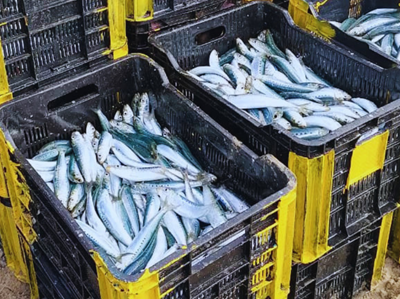
South Africa investigates sardine deaths as scientists examine possible virus link
Authorities continue monitoring after large numbers of sardines washed ashore along parts of the coast
Gqeberha, 31 August 2026: South African authorities are continuing to investigate the deaths of sardines reported along parts of the country’s coastline, with scientists examining whether a fish virus could be contributing to the unusual mortality event.
The Department of Forestry, Fisheries and the Environment (DFFE) has been coordinating investigations into the incident, which has included reports of sardines washing ashore, as well as fish found floating offshore and inside the harbour at Gqeberha.
The investigation has attracted attention from scientists and environmental authorities because of the scale of the fish deaths and the potential implications for marine ecosystems and the fishing industry.
Scientists investigate possible virus
Researchers have been examining samples for pilchard herpesvirus (PHV), a virus known to affect sardines.
DFFE previously reported that genetic material from PHV had been detected in samples tested by the South African Institute for Aquatic Biodiversity and Rhodes University.
Initial testing found the virus in all 15 fish examined at that stage, while 10 fish collected from the mortality event showed consistently high viral levels.
Further samples have since been processed as authorities work to determine the role the virus may have played in the deaths.
The viral sequence identified in the South African samples showed a very high genetic match to an Australian PHV gene.
However, scientists have stressed the importance of continuing the investigation before reaching firm conclusions about what caused the mortality event.
Multiple factors being considered
The presence of PHV does not automatically establish that the virus was the sole cause of the sardine deaths.
Researchers are considering other possible environmental and biological factors that could contribute to fish mortality.
These include changes in ocean conditions, water temperature, oxygen levels and harmful algal activity.
Environmental stress can weaken fish and potentially make them more vulnerable to disease.
The investigation is therefore looking at a combination of factors rather than relying on a single explanation.
Monitoring continues
DFFE said in its latest update that no new mass-mortality incidents had been reported since 16 August, suggesting that the acute phase of the event may have eased.
However, monitoring remains ongoing.
Authorities continue to collect information and samples to better understand what happened and whether there are signs of further fish deaths.
The investigation is important not only from an environmental perspective but also because sardines form part of South Africa’s marine food chain and support economic activity linked to fisheries.
What does the virus mean for people?
The investigation has also raised questions about whether the virus could pose a risk to people who eat sardines.
Current scientific information indicates that pilchard herpesvirus affects fish rather than humans.
The presence of the virus in affected fish does not mean that consumers should assume that commercially available sardines are unsafe.
As with any seafood product, consumers should continue to follow normal food-safety guidance and purchase fish from reputable sources.
Authorities will continue to assess the situation as further scientific information becomes available.
Why sardines matter
Sardines are an important part of South Africa’s marine ecosystem.
They serve as prey for a variety of larger marine animals and are also commercially valuable.
Large changes in sardine populations can therefore have wider ecological implications, particularly for predators that rely on small pelagic fish as a food source.
For fishing communities, unusual mortality events can also raise concerns about future catches and the health of marine resources.
Scientists are therefore monitoring the situation closely.
Investigation remains ongoing
The DFFE has emphasised that the investigation is continuing and that further testing is needed.
The department has been working with scientific institutions and other stakeholders to analyse samples and assess the possible causes of the mortality event.
The fact that no new mass-mortality incidents have been reported since mid-August is a potentially positive development, but authorities are maintaining surveillance.
For now, scientists are focused on establishing the relationship between PHV and the fish deaths while examining environmental conditions that may have contributed.
The investigation illustrates the importance of scientific monitoring of South Africa’s marine environment, particularly when unusual changes occur in species that play an important role in both ecosystems and the economy.
Further findings are expected as laboratory testing and environmental assessments continue.