
Africa’s New Trade Corridors Are Opening a New Era of Economic Opportunity
For decades, one of the biggest challenges facing African businesses has been getting goods from one market to another efficiently. Long distances, expensive transport, congested borders and limited infrastructure have made it difficult for businesses to operate across national boundaries.
That picture is beginning to change.
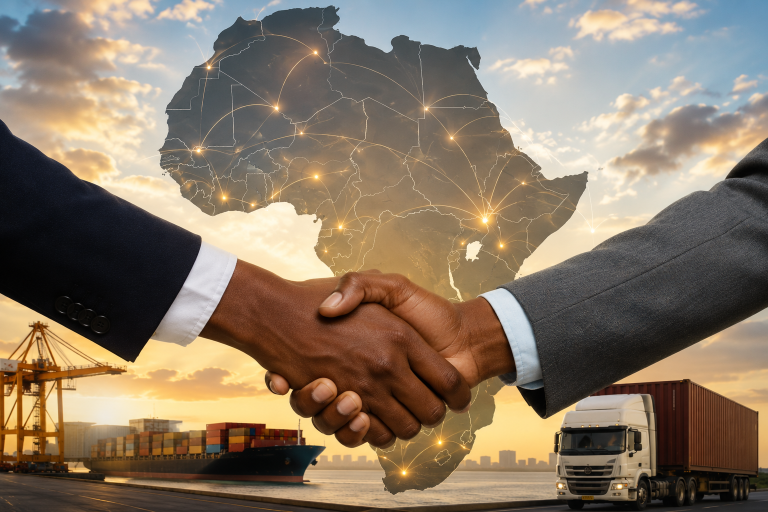
Across the continent, major investments in roads, railways, ports, border facilities and logistics networks are creating new Africa trade corridors that could fundamentally change the way commerce happens across the continent.
The opportunity is much bigger than simply moving goods faster.
These corridors are creating the infrastructure needed to connect producers with consumers, businesses with new markets and investors with emerging opportunities.
From infrastructure to economic opportunity
A modern trade corridor is more than a road connecting two cities.
It can include highways, rail networks, ports, border posts, warehouses, logistics hubs, energy infrastructure, digital systems and financial services. When these systems work together, they can dramatically reduce the time and cost involved in moving goods.
For African businesses, this matters enormously.
A manufacturer in one country can potentially access customers in several neighbouring markets. A farmer can reach urban consumers more efficiently. A logistics company can build services around growing trade volumes. And an entrepreneur can identify opportunities in areas such as warehousing, packaging, transport, technology and financial services.
The development of these corridors is therefore creating opportunities far beyond the construction sector itself.
The rise of regional trade
The African Continental Free Trade Area has added another important dimension to this transformation.
The agreement seeks to create a single African market and increase trade between African countries. But trade agreements can only achieve their full potential when businesses have the physical and logistical infrastructure required to move products efficiently.
This is where trade corridors become critical.
Better connectivity can help businesses take advantage of larger markets instead of relying almost entirely on domestic demand.
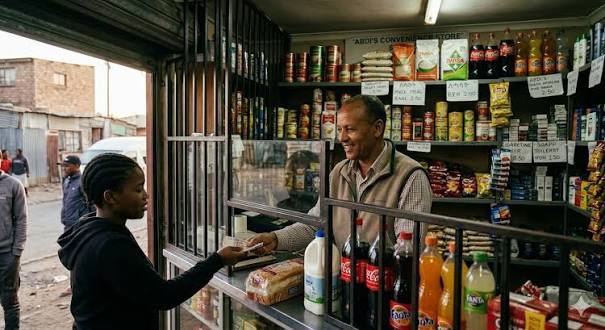
For small and medium-sized enterprises, this could be particularly significant.
A business that previously viewed neighbouring countries as distant and difficult markets may increasingly begin to see the region as part of its natural customer base.
New opportunities for entrepreneurs
One of the most exciting aspects of Africa’s expanding trade infrastructure is the number of businesses that can emerge around it.
Transport companies are an obvious example, but the opportunity extends much further.
There is growing potential in cold-chain logistics, warehousing, freight management, customs technology, digital payments, insurance, vehicle maintenance, food processing, packaging and distribution.
Technology companies can also play a major role.
Digital platforms can help businesses track shipments, manage inventory, process payments and connect suppliers with customers across borders.
This means Africa’s trade transformation is not only an infrastructure story. It is also an entrepreneurship story.
Value addition could be the bigger opportunity
Moving raw materials from one country to another is only one part of the equation.
The bigger opportunity may be creating more value before products leave African markets.
Instead of exporting agricultural products in their raw form, businesses can process, package and brand them locally. Instead of exporting minerals without significant downstream activity, countries can seek greater participation in processing and manufacturing.
Trade corridors can make these value chains more viable by connecting production centres with processing facilities, ports and consumer markets.
This could help African economies move closer to a model where more wealth is created and retained within the continent.
Businesses need to think beyond borders
The development of new corridors also requires a change in mindset.
African entrepreneurs cannot afford to think only about what they can sell in their immediate communities or countries. As connectivity improves, the potential customer base becomes increasingly regional.
That means understanding neighbouring markets, regulations, consumer behaviour, languages, logistics costs and payment systems will become increasingly important.
Businesses that prepare early may have an advantage.
The companies that succeed in the next phase of African economic development may not necessarily be the biggest companies today. They may be the businesses that understand how to connect markets, solve logistical problems and create value across borders.
A continent becoming more connected
Africa still faces enormous infrastructure and trade challenges. Progress will not happen overnight, and many corridors require continued investment, improved border processes and stronger cooperation between countries.
But the direction is significant.
As roads, railways, ports, digital systems and regional markets become more connected, Africa is gradually developing the infrastructure needed to support a more integrated economy.
For entrepreneurs, investors and businesses, the message is clear: the continent is becoming more connected, and connectivity creates opportunity.
The next African growth story may not simply be about individual countries.
It may be about the connections between them.