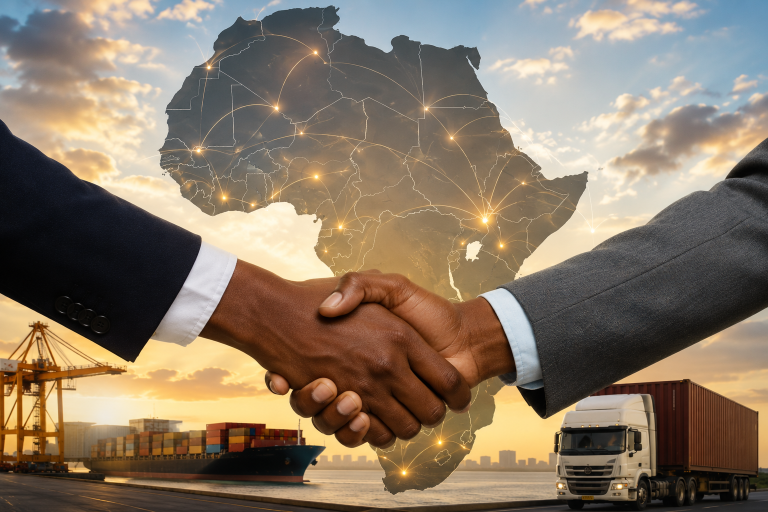

Africa’s Digital Revolution: How Technology Is Reshaping Everyday Life
Africa’s technology story is no longer simply about catching up with the rest of the world. Across the continent, a new generation of innovators is using technology to solve local problems, create businesses and transform the way people work, communicate and access services.
From mobile money and digital banking to e-commerce, artificial intelligence and online education, technology is becoming increasingly woven into everyday African life.
And perhaps most importantly, many of these innovations are being designed for African realities.
A continent increasingly connected
Over the past two decades, mobile technology has transformed communication across Africa.
For millions of people, a smartphone is no longer simply a device for making calls. It is a bank, marketplace, classroom, entertainment centre, business tool and connection to the wider world.
This has created opportunities for people who previously had limited access to traditional financial and commercial systems.
A small business owner can advertise products on social media, communicate with customers through messaging platforms, receive digital payments and arrange deliveries — often without needing a physical storefront.
Technology has effectively lowered some of the barriers to entering the marketplace.
Mobile money changed the rules
One of the most powerful examples of African innovation has been the growth of mobile money.
Instead of relying entirely on traditional banking infrastructure, consumers can use their mobile phones to send, receive and store money.
The success of mobile financial services demonstrated something important: African consumers do not always need to follow the same technological path as wealthier markets.
In some cases, the continent has been able to leapfrog older systems and move directly towards newer solutions.
That same principle is now appearing in other industries.
Technology is creating new businesses
Africa’s digital economy is also creating an entirely new generation of entrepreneurs.
Businesses that would once have required significant physical infrastructure can now begin online.
Digital marketing agencies, software companies, online retailers, content creators, financial technology businesses and remote professional services are all part of this expanding ecosystem.
For young Africans in particular, the internet has opened doors to customers and employers far beyond their immediate communities.
A graphic designer in Johannesburg can work with a client in Lagos.
A software developer in Nairobi can build products for companies around the world.
A content creator in Accra can develop an audience across the continent.
The marketplace is becoming increasingly borderless.
E-commerce is changing how people shop
Online shopping is also becoming a larger part of the African consumer experience.
Consumers increasingly expect businesses to be discoverable online, communicate quickly and provide convenient purchasing options.
For businesses, this creates both an opportunity and a challenge.
Being online is no longer simply about having a website.
Businesses need to understand digital marketing, customer experience, payment systems, logistics and data.
The companies that combine these elements effectively can build relationships with customers well beyond their immediate geographic location.
Education is moving beyond the classroom
Technology is also changing how Africans learn.
Online courses, digital learning platforms, educational videos and virtual classrooms have made knowledge more accessible to people who may not have access to traditional institutions.
A student can learn a new language, develop business skills, study technology or access professional training from a smartphone.
For working adults, digital education can provide opportunities to develop new skills without leaving employment.
This is particularly important as technology continues to change the nature of work.
Artificial intelligence is the next frontier
Artificial intelligence is likely to become one of the most important technological developments shaping Africa’s future.
AI has the potential to support businesses, improve customer service, analyse information, assist educators and create new products and services.
But Africa should not simply become a consumer of AI technologies developed elsewhere.
There is an opportunity for African innovators to build solutions that understand African languages, markets, cultures and challenges.
AI systems designed with African realities in mind could potentially support areas ranging from agriculture and healthcare to financial services, education and public administration.
The opportunity is enormous — but so is the responsibility to ensure that technology is used ethically and inclusively.
The digital divide remains
Despite the progress, Africa’s digital revolution is far from complete.
Millions of people still face barriers including expensive data, limited connectivity, unreliable electricity and inadequate access to digital devices.
Urban areas often have significantly greater access to digital infrastructure than rural communities.
This means that technology can potentially create new inequalities if access is not expanded.
A truly inclusive digital economy must therefore focus not only on innovation but also on accessibility.
Technology is most powerful when ordinary people can actually use it.
Skills will determine the future
Infrastructure alone will not be enough.
Africa will also need people with the skills to build, manage and use emerging technologies.
Digital literacy, coding, data analysis, cybersecurity, artificial intelligence and entrepreneurship are likely to become increasingly valuable skills.
Schools, universities, businesses and governments all have a role to play in developing this talent.
The continent’s young population could become one of its greatest advantages if young people are given the tools and opportunities to participate meaningfully in the digital economy.
Africa’s technology story is only beginning
Africa’s digital transformation is not a single event.
It is a gradual process that is changing how people communicate, trade, learn, work and build businesses.
The most exciting part may be that many of the continent’s technology solutions are emerging from people who understand its challenges firsthand.
They are not simply asking how Africa can adopt technology.
They are asking a more important question:
How can technology be redesigned to work for Africa?
That question could shape the continent’s next economic chapter.
Africa’s digital future will not be defined only by how much technology it consumes.
It will be defined by how effectively Africans use technology to solve problems, create opportunities and build businesses capable of competing with the rest of the world.
And that revolution is already underway.