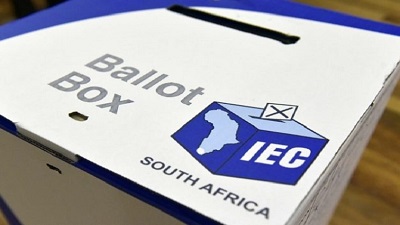
More Than 5,000 Candidates Disqualified Ahead of South Africa’s 2026 Local Elections
The IEC has certified 136,790 candidates for the 4 November elections, while the ANC prepares to pursue another legal challenge over 181 excluded candidates.
South Africa’s 2026 local government elections are entering a critical phase, with the Electoral Commission of South Africa (IEC) confirming that 5,096 candidates have been disqualified from contesting the polls.
At the same time, 136,790 candidates have been certified to contest 10,526 municipal seats across the country when voters head to the polls on 4 November 2026.
The figures were announced by the IEC on Wednesday as the commission finalised the list of candidates who will appear on the ballot.
But the candidate list has already become the subject of a major political and legal dispute, with the African National Congress (ANC) saying it will pursue an appeal after the Electoral Court dismissed its challenge concerning 181 candidates.
Why were more than 5,000 candidates disqualified?
The 5,096 disqualifications followed the IEC’s statutory review of candidate nominations.
The commission said the review included checking whether candidates were properly nominated and whether the applicable election deposits had been paid.
The process also identified cases involving missing documentation and duplicate nominations.
Earlier this month, the IEC issued notices to 221 political parties and independent candidates concerning 1,280 nominated candidates who needed to submit additional information, including identification documents and completed acceptance-of-nomination forms.
The commission subsequently identified another 550 candidates who had either been nominated both as independents and by political parties, or by more than one political party.
Parties and affected candidates were given opportunities to correct or resolve certain issues within the election timetable.
ANC’s 181-candidate dispute
One of the most closely watched disputes concerns the ANC’s candidates in six municipalities.
The party argued that candidate information had been captured on the IEC’s online nomination system before the 28 August deadline, but that technical problems prevented some submissions from being formally completed.
The affected municipalities include Mangaung in the Free State; uMshwathi in KwaZulu-Natal; and Sundays River Valley, Walter Sisulu, Ingquza Hill and Port St Johns in the Eastern Cape.
The ANC wanted the IEC to recognise the affected nominations and allow the candidates to contest the elections.
However, the Electoral Court rejected the party’s challenge.
The IEC has welcomed the ruling, saying the decision provides certainty about which candidates are eligible to participate in the elections.
The ANC has indicated that it intends to pursue the matter further through the appropriate legal channels.
How many candidates will voters choose from?
Despite the thousands of disqualifications, the 2026 elections will have an unprecedented number of candidates.
The IEC says 136,790 candidates have met the requirements to contest seats across:
- 8 metropolitan municipalities
- 44 district municipalities
- 205 local municipalities
Of the total, 98,219 candidates were nominated by political parties to contest ward seats, while 38,571 will contest proportional representation seats.
There are also 621 independent candidates contesting ward seats.
The number is significantly higher than in the 2021 local government elections, when 95,427 candidates contested 10,478 available seats.
Johannesburg will have 75 parties on the ballot
The sheer number of parties contesting the elections is also creating a logistical challenge for the IEC.
In several major municipalities, the number of parties contesting proportional representation seats means voters will see double-column ballot papers.
The City of Johannesburg has the highest number, with 75 parties contesting PR seats.
It is followed by:
- City of Tshwane — 70 parties
- eThekwini — 69
- Ekurhuleni — 67
- Cape Town — 55
The IEC says a double-column ballot becomes necessary where more than 48 parties appear on the PR ballot.
The number of candidates can also make ward ballots particularly crowded. In Johannesburg Ward 18, for example, there are 63 candidates contesting the ward seat.
Young people remain underrepresented
The IEC’s candidate statistics also reveal a significant gender and age imbalance.
Candidates aged 40 to 49 make up the largest age group at 31%, followed by those aged 50 to 59 at 24.3%.
Candidates aged between 30 and 39 account for 23.8%.
Overall, people aged 18 to 39 make up 32% of candidates, meaning young people remain underrepresented among those seeking municipal office.
There is also a notable gender gap.
Of all candidates, 62% are men and 38% are women.
Women account for 44% of proportional representation candidates, but only 35% of ward candidates.
What happens next?
With the final candidate lists now being published, the IEC is moving ahead with preparations for the 4 November 2026 local government elections.
The next important dates include the issuance of candidate certificates on 25 September.
Applications for special votes will open on 21 September and close on 12 October at 17:00. Special voting will take place on 2 and 3 November, ahead of Election Day.
The IEC is also preparing ballot papers and conducting further testing of its election results systems.
The ballot-paper draw and signing of the Electoral Code of Conduct are scheduled for 23 September.
For voters, the publication of the final candidate lists provides an important opportunity to start familiarising themselves with who will actually be contesting in their municipality and ward.
What this means for voters
The 2026 local government elections will determine who represents communities at the municipal level, making the candidate lists particularly important.
While national political battles often dominate headlines, municipal councillors have a direct role in issues that affect people’s everyday lives, including local services, infrastructure, development and municipal governance.
With more than 136,000 candidates now certified, voters will have a huge number of choices to consider.
The challenge will be separating the noise from the information that matters: who is standing, which ward or municipality they are contesting, what they are promising and what their record tells voters about what they could deliver.
South Africa’s local government elections take place on 4 November 2026.
Electoral Commission of South Africa (IEC)