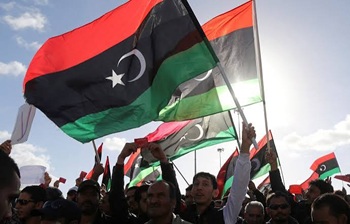
Libya’s rival administrations agree on roadmap towards elections
TRIPOLI, Libya, 1 September 2026: Libya’s rival political administrations have agreed on a roadmap aimed at holding national elections within two years, offering a potential path towards ending years of political division.
Representatives of Libya’s competing political institutions reached the agreement during UN-backed discussions in Tripoli.
The proposed roadmap calls for legislative and presidential elections within 24 months and seeks to address disagreements that have repeatedly delayed the country’s political transition.
Elections have remained elusive
Libya has been divided between competing political and military centres for years.
A national election scheduled for December 2021 collapsed after disputes over electoral rules and the eligibility of major candidates.
Since then, efforts to establish a credible path towards elections have repeatedly struggled to overcome political disagreements.
The latest agreement is therefore being viewed as a potentially significant step towards rebuilding unified national institutions.
UN-backed process
The agreement emerged from talks involving representatives of Libya’s major political institutions, including the Government of National Unity, the High Council of State, the House of Representatives and the Libyan National Army.
The process has focused on resolving disagreements over electoral laws and reforming the country’s electoral institutions.
Under the proposed roadmap, elections would take place under a single executive authority and with the aim of restoring more unified national institutions.
The road ahead
Despite the agreement, significant challenges remain.
Libya’s political divisions have persisted for more than a decade, and previous agreements have struggled to translate into lasting political settlements.
The next stage will therefore be crucial.
The competing institutions will need to approve and implement the roadmap while maintaining enough political cooperation to prevent another breakdown in the process.
For ordinary Libyans, the prospect of elections carries hopes of greater political stability and stronger national institutions.
A possible turning point
The agreement does not guarantee that Libya will reach elections within two years.
However, it provides a new framework for attempting to resolve some of the political disputes that have prevented national elections from taking place.
If implemented successfully, the roadmap could represent an important step towards ending Libya’s prolonged political fragmentation.
For now, attention will turn to whether the country’s rival institutions can convert the agreement into concrete political and electoral reforms.