Omnia Takeover: 5 Big Things to Know About the R21.8bn Deal
The proposed Omnia takeover by India’s Solar Industries could bring the curtain down on the South African company’s long run as a JSE-listed business. Here are five things South Africans need to know about the R21.8 billion deal.
A major South African corporate deal is making headlines, and the numbers are hard to ignore.
The proposed Omnia takeover would see India’s Solar Industries acquire all of the issued ordinary shares in Omnia Holdings in an all-cash transaction valued at approximately R21.8 billion.
If the transaction goes ahead, Omnia will be delisted from both the Johannesburg Stock Exchange (JSE) and A2X Markets.
For a company that has been part of South Africa’s industrial landscape for decades, that is a significant development.
But what exactly is being bought, why does Solar want Omnia, and what does the deal mean for shareholders?
Here are five important things to know.
1. The Omnia takeover is worth R21.8 billion
Solar SA Investments, a wholly owned subsidiary of Solar Industries India, has made a firm offer to acquire Omnia for R134.50 per share.
That values Omnia’s issued share capital at approximately R21.8 billion.
The offer represents a substantial premium to Omnia’s recent share price.
According to the companies, R134.50 represents a 30.98% premium to Omnia’s closing price of R102.69 on 10 September 2026.
It is also a 14.30% premium to the company’s closing price on 11 September and a 35.73% premium to its 30-day volume-weighted average price.
For shareholders who have held Omnia shares, the proposed deal therefore represents an opportunity to receive cash at a considerably higher price than where the stock was trading before the takeover discussions became public.
2. A South African JSE-listed company could disappear from the market
Perhaps the biggest story isn’t simply the R21.8 billion price tag.
It is what happens afterwards.
If the proposed transaction becomes effective, Omnia’s shares will be delisted from the JSE’s Main Board and from A2X Markets.
That means investors will no longer be able to buy and sell Omnia shares on those exchanges as an independently listed South African company.
The development comes at a time when South Africa’s stock market has already seen a number of major companies leave the JSE through acquisitions, restructurings or delistings.
For investors, every major delisting reduces the number of listed businesses available locally.
For Omnia, however, the proposed transaction is being presented as a way of accelerating its growth strategy rather than simply an exit.
3. Who is buying Omnia?
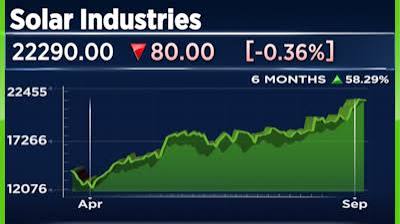
The buyer is Solar Industries India Limited, through Solar SA Investments.
Solar is a major industrial company headquartered in India with businesses spanning industrial explosives as well as defence and aerospace.
The company operates internationally, with customers in more than 90 countries and manufacturing operations across 11 countries.
That makes the Omnia deal more than a straightforward South African acquisition.
It is part of Solar’s wider international expansion.
For Solar, Omnia provides access to established businesses, customers, manufacturing capabilities and markets across several regions.
The acquisition would also strengthen Solar’s position in mining-related products and services.
4. Why does Solar want Omnia?
This is where the deal gets particularly interesting.
Omnia is not just one business.
Its operations include Mining and Agriculture, giving the company exposure to two industries that are strategically important across Africa and other emerging markets.
Its mining business provides solutions used in the resources sector, while its agriculture operations supply products and services linked to crop production and agricultural productivity.
Solar says combining the businesses could create opportunities for greater scale, technology development, research and development, manufacturing capacity and market access.
For Solar, Omnia also brings an established international footprint.
That gives the Indian group an opportunity to expand its reach while gaining access to capabilities that would take years to build organically.
In simple terms, Solar isn’t just buying a South African name.
It is buying an established industrial platform.
5. What happens next?
The Omnia takeover is not completed yet.
The proposed transaction still has to go through the required regulatory and shareholder processes before it can become effective.
Omnia’s board has indicated that, subject to its legal and fiduciary duties, it intends to recommend the proposed scheme to shareholders.
The transaction is therefore something investors will be watching closely over the coming months.
If all the necessary conditions are satisfied, the deal would ultimately result in Omnia being delisted from the JSE and A2X.
What does this mean for ordinary South Africans?
At first glance, this might look like a story that only matters to investors.
It isn’t.
Omnia has been part of South Africa’s industrial economy for decades, with businesses connected to mining, agriculture, chemicals and manufacturing.
Those sectors have a direct or indirect impact on employment, exports, food production, mining activity and the wider economy.
The deal also highlights a bigger trend: international companies are increasingly looking at established South African businesses as gateways into African markets.
For shareholders, the immediate attraction is the premium cash offer.
For South Africa, however, the bigger question is what happens to locally listed companies when international buyers come calling.
The Omnia deal shows both sides of that equation.
It could unlock significant value for shareholders and give Omnia access to a much larger international industrial group.
At the same time, another established company could disappear from the JSE.
The bigger picture
The proposed Omnia takeover is therefore about more than R21.8 billion.
It is a story about South African business, international investment and the changing face of the country’s stock market.
For Solar Industries, the acquisition offers a chance to expand its global mining and agriculture footprint.
For Omnia shareholders, it offers a sizeable cash premium.
And for South Africa, it raises an interesting question about whether locally listed companies are becoming increasingly attractive targets for international buyers.
The deal still has several hurdles to clear, so the final chapter has not yet been written.
But if it succeeds, one thing is certain: a major South African corporate era could be coming to an end.
Would you rather see a successful South African company remain listed locally, or is an international takeover a good thing if it creates more opportunities for growth?