
Industrial Businesses and the Public Sector Partner to Transform Vacant Land into Community Sports Facility
WIKA Instruments and 20 corporate partners join SAPS, PRASA and the local community to convert neglected land in Johannesburg’s eastern industrial corridor into permanent community infrastructure.
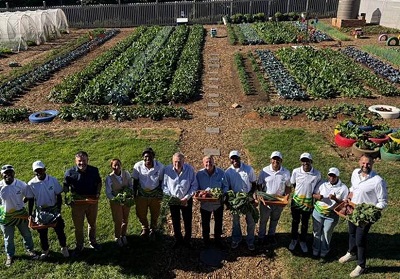
A previously vacant and dilapidated site in Denver has been transformed into a community sports facility and 1,000 m² garden through a partnership led and funded by measurement technology manufacturer WIKA Instruments South Africa.
Located on Chilvers Street in Denver, approximately six kilometers east of central Johannesburg on the industrial corridor towards Germiston, the development brings together sport, practical training, youth development and employment opportunities in a dedicated community space.
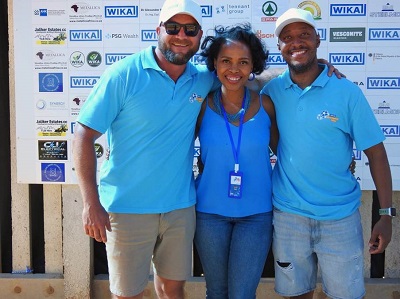
The Sport Against Crime Initiative was spearheaded by WIKA Instruments, which has operated from Denver since 1993, in collaboration with the South African Police Service (SAPS), the Passenger Rail Agency of South Africa (PRASA), community representatives and 20 corporate partners including Fluidra, Valbruna Stainless Steel, Metallica Africa Trading, SAIMC NPC, Busch Vacuum, LH Marthinusen, Vesconite Bearings, CBB Roedl & Partner Inc., Denver Industrial Zone, Jurgens Bekker, Synergy Commodities and the Mangolongolo community.
The site was acquired two years ago and has since been converted from neglected land into permanent infrastructure where children and young people can participate in organised sport, receive mentorship, develop practical skills and build positive relationships away from crime, substance abuse and social isolation.
Alongside the sports facilities, a 1,000 m² community garden provides agricultural training and practical work experience for 15 participants. This includes six Youth Employment Service temporary employees who will continue to maintain the premises.
Industrial Community Collaborates on Local Challenge
For Michael Weidenmann, founder of the Sport Against Crime Initiative and Managing Director of WIKA Instruments South Africa, the project demonstrates the contribution that manufacturers, engineering businesses and other industrial companies can make beyond their factory gates.
“Crime and social challenges cannot be addressed by one company or organisation acting alone. Bringing this project to life required the commitment of SAPS, PRASA, local businesses, community representatives and every partner that contributed funding, equipment, expertise, services or time,” says Weidenmann.
“Their support helped transform an empty, neglected piece of land into a place where young people can play sport, learn practical skills and build confidence. It demonstrates what can be achieved when organisations combine their resources and expertise to deliver something tangible for the community.”
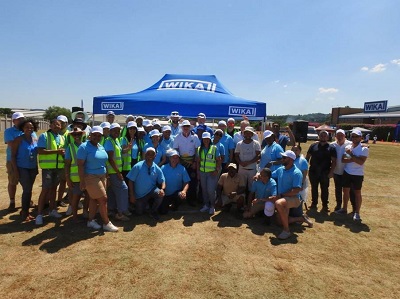
The project drew support from businesses across the engineering, manufacturing and industrial sectors, with partners contributing resources ranging from funding and equipment to technical expertise, materials, services and labour.
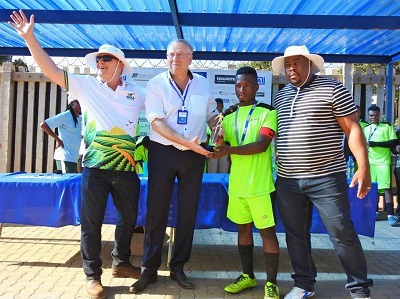
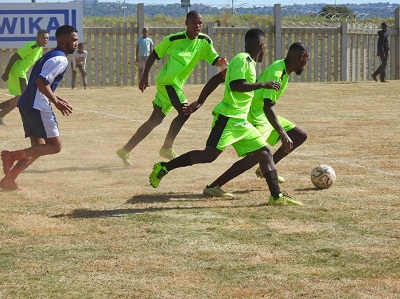
The official opening brought together community leaders, project partners, government representatives, SAPS, PRASA, schools, sporting organisations and local residents. The programme included addresses on youth development and community safety, the formal unveiling of the facility, cultural performances and exhibition soccer matches involving WIKA, SAPS, PRASA and community teams.
Three Decades of Manufacturing in Denver
WIKA Instruments has operated from Denver for more than three decades. The company’s Johannesburg headquarters and manufacturing facility produces more than 150,000 instruments annually and is supported by advanced production capabilities, ISO 9001 quality management and SANAS-accredited calibration laboratories.
Its decision to invest in the Sport Against Crime Initiative reflects the company’s long-term connection to the industrial area in which its employees work and through which many travel every day.
“We are not removed from the challenges facing Denver. Our employees travel through this community, their families live here and our business has been part of the area for more than three decades,” says Weidenmann.
“There may have been moments when leaving appeared to be the easier option, but we chose to stay, invest and work alongside our neighbours. For an industrial business, being part of an area over the long term means taking an interest not only in what happens inside the factory, but also in the environment around it.”
Weidenmann says the company sees practical skills development as an important component of that investment. “We want to help the next generation develop skills that can contribute to meaningful futures while also playing a role in the long-term renewal of Denver.”
Infrastructure Designed for Long-Term Use
The Sport Against Crime Initiative has been structured as a long-term community platform rather than a once-off Corporate Social Responsibility (CSR) intervention.
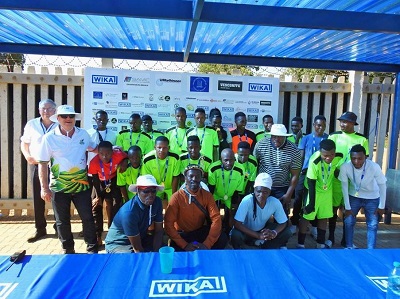
The facility will support organised sport and recreation, mentorship, health and wellness activities, leadership development and pathways to practical training and employment. It also provides a permanent base for continued cooperation among businesses, SAPS, PRASA, schools, families, community organisations and public services.
“The opening of the facility was the starting point, not the final achievement,” says Weidenmann. “Its success will be measured by the programmes, the partnerships and the outcomes. Our responsibility now is to ensure that this remains a safe, active and sustainable community space.”
Industry Partners Support Development
Weidenmann commends the project partners and event sponsors. “Their collective support helped transform the Sport Against Crime Initiative from a community vision into permanent infrastructure. We look forward to seeing how this project develops and what it can contribute to the Denver community in the years ahead,” he concludes.
ADVERTISEMENT